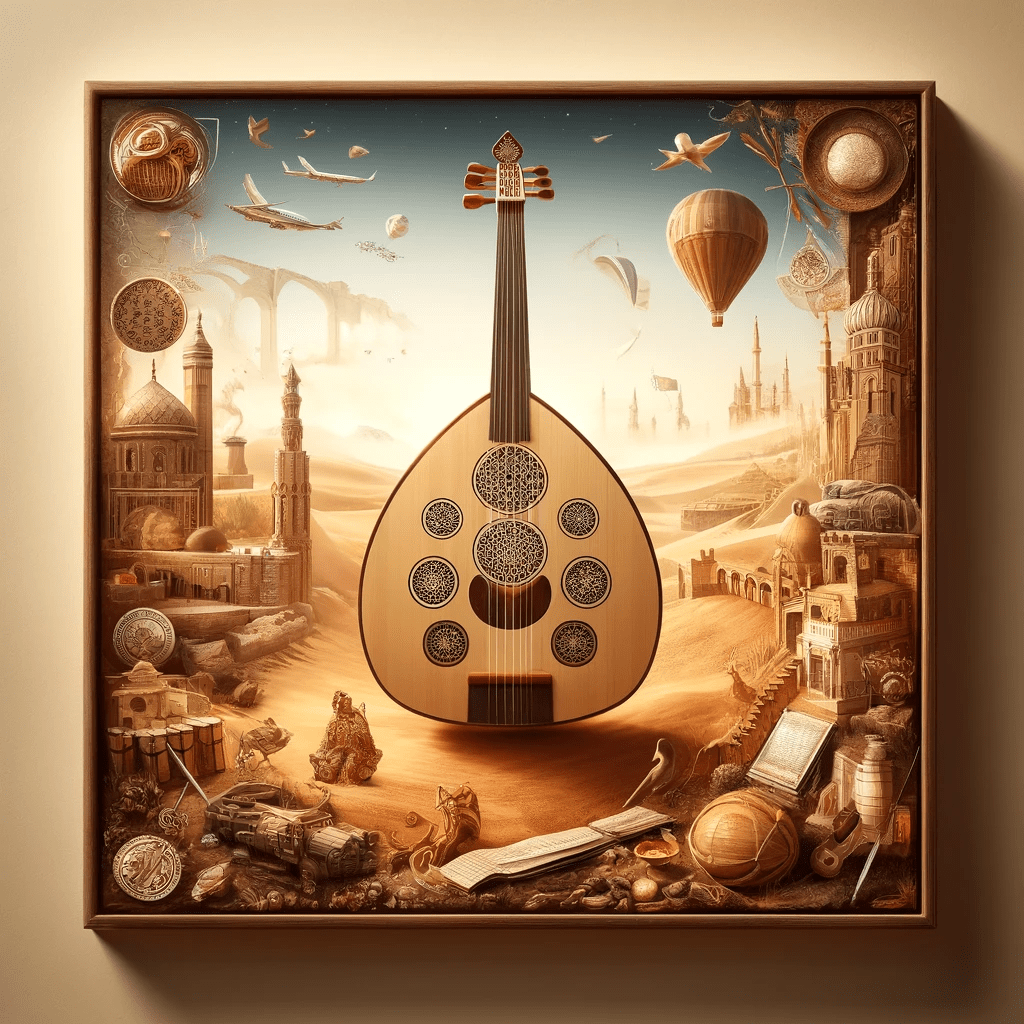
The Fascinating History of the Oud: A Musical Journey Through the Ages
Share
The oud is arguably one of the most iconic stringed instruments of Middle Eastern and Oriental music. Its history dates back over 5,000 years, with deep roots in Mesopotamia and ancient Egypt.
Originally made of wood and goat gut, the oud has evolved over the centuries. Its name comes from the Arabic word "al-oud," meaning "wood," in reference to its manufacture. Introduced to Europe through Spain during the Moorish era, the oud has influenced many Western instruments, including the lute.
Today, it is at the heart of traditional Arabic, Turkish, and Persian music. With its 11 strings and wide sound box, it produces deep, melodious sounds that transport listeners to distant landscapes.